The quiet compromise baked into almost every plant-based milk on the market.
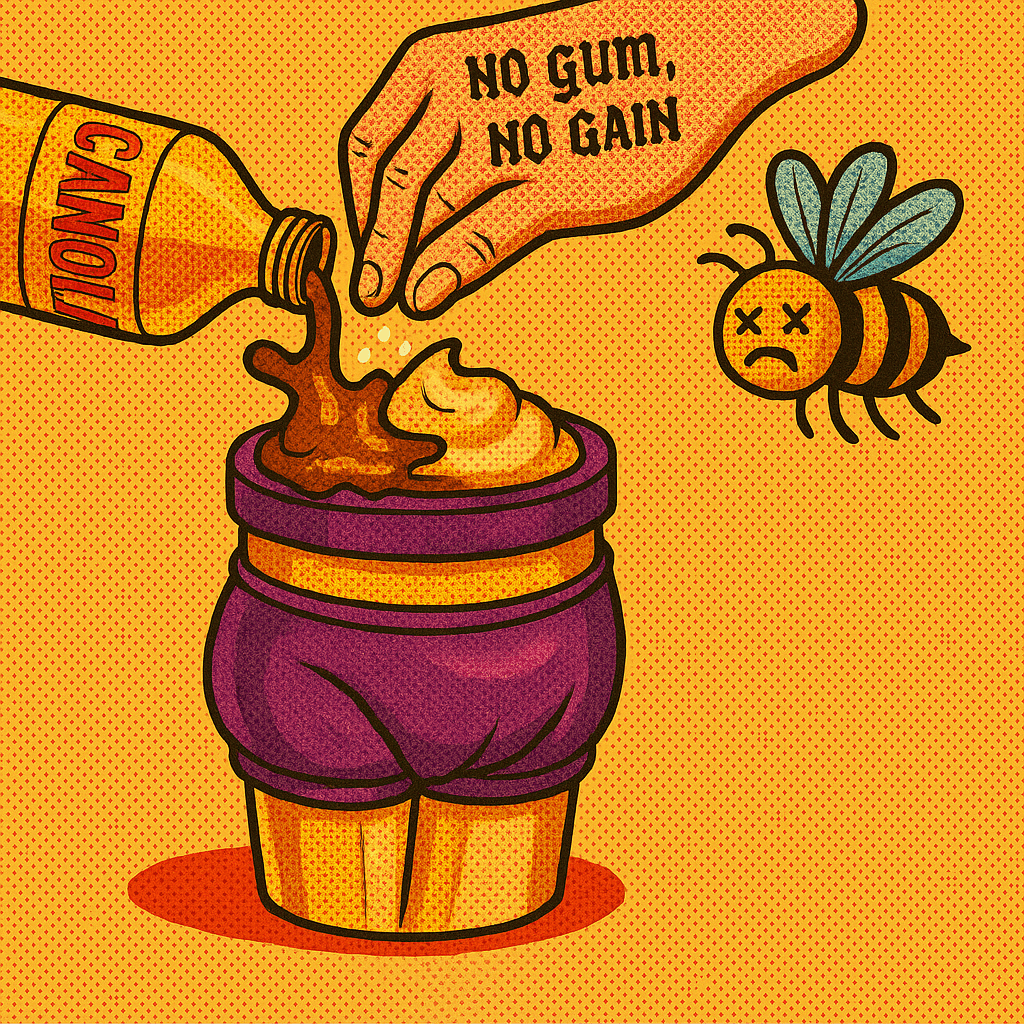
Turns out, it wasn’t just you.
That quiet doubt you felt—the one you brushed off every time you poured “the best” oat milk into your cup?
That little whisper:
“Why doesn’t this feel right?”
It wasn’t in your head.
For years, plant-based milks have been presented as one-to-one replacements for dairy—equal in function, nutrition, and health halo.
But in a 2021 study, Drewnosky et al. concluded that:
“Often viewed as equivalent to milk in nutritional value, many plant-based beverages are low in protein and are fortified with varying amounts of calcium, and vitamins A and D.
Nutrient standards for this category should be adopted by the food industry, by public health regulatory authorities, and by standardization bodies such as the Codex Alimentarius.” [^1]
In other words:
Most plant milks aren’t just nutritionally incomplete—they’re riding on assumptions that haven’t been formalized, regulated, or earned.
And then there are three compromises most plant-based milks never mention.
Not on the front of the label.
Not in the ads.
Not even in the “clean” versions you pay extra for.
1. The sugar trap
Some call it “natural sweetness.”
But your body doesn’t care what they call it.
According to recent research, many popular plant-based milks—including oat, almond, soy, and even unsweetened hemp—carry glycemic loads that land in the same range as Coca-Cola.[^1]
So that gentle latte you love?
It might be quietly spiking your blood sugar like soda dressed in yoga pants.
2. The texture trick
Ever wonder why it froths just right?
Why it thickens like milk?
Why it clings to your cup like it belongs there?
It’s not magic.
It’s gums.
And emulsifiers.
And stabilizers with names you probably can’t pronounce—but your gut definitely remembers.
Carrageenan. Gellan gum. Carboxymethylcellulose.
(Spoiler alert: none of them live in your kitchen.)
They’re not there for your health.
They’re there because the based ingredients can’t produce that texture on their own.
These ultra-processed additives help plant milks look the part.
They help them act the part.
They help them sell.
But for a lot of people?
They come at a price.
Bloating.
Brain fog.
That vague, not-quite-right feeling you brush off—until you can’t anymore.
And maybe that’s why, in one recent study, over 90% of plant-based milks were classified as ultra-processed.[^2]
Not because of sugar.
Not because of calories.
But because of this:
The texture trick.
So if you’ve ever felt like your plant-based milk was playing dress-up...
That it was trying to pass for real food, but something always felt... off.
You were right.
3. The sustainability story no one wants to touch
Oat. Almond. Soy.
Wrapped in green leaves and earthy fonts.
But behind the marketing:
Almonds?
Oats?
Often grown with glyphosate. [^4]
Also known as Roundup.
Also known as the most controversial pesticide ever approved for agriculture.
Originally developed as an industrial pipe cleaner, glyphosate is now linked to everything from cancer and Parkinson’s, to gut microbiome disruption, reproductive harm, and more. [^5]
Which is why it is now the subject of over 67,000 active lawsuits. [^5]
As of May 2025, $11 billion have already been paid in settlements. [^5]
And in the cases that went to trial?
Juries have handed down verdicts of over $2 billion in damages—twice. [^5]
Things have escalated to the point where Monsanto, the manufacturer, is said to be exploring bankruptcy. [^5]
And yet…
It’s still widely used in the production of something people pour into their bowl of cereal or morning latte.
Soy?
Let’s start with what’s in the ground.
Over 77% of soybeans worldwide are genetically modified—engineered to tolerate glyphosate, the same herbicide we just talked about. [^6]
This combination—called a “technological package”—lets farmers spray fields with Roundup during the growing season, killing everything except the soy.
That’s why researchers in Norway found glyphosate residue levels in soybeans that were 1.6× higher than even Monsanto’s own “extreme threshold.” [^6]
And that’s just one concern.
The other?
Hormones.
Soy contains phytoestrogens—plant compounds that can mimic estrogen in the body.
And while the science isn’t settled, there’s enough research to raise eyebrows:
Studies show soy can disrupt male and female hormone levels. [^7]
It’s been linked to hypothyroidism and goiter without adequate iodine. [^7]
Animal studies suggest it may influence anxiety, aggression, and behavior. [^7]
As one team of researchers put it:
“We embrace soy’s hormone-like compounds… even though they behave just like the synthetic endocrine disruptors we try to avoid in our household products.
With risks likely underappreciated.” [^7]
And then there’s the land.
According to the WWF, the global expansion of soy farming has driven vast deforestation—especially in regions like the Amazon and Cerrado—putting biodiversity, indigenous lands, and carbon sinks at risk. [^8]
So… is soy bad?
We’re not here to make that call for you.
But let’s just say—it’s a little harder to pour it into your smoothie or latte with confidence once you’ve seen what’s beneath the leaf.
We’re told it’s better than dairy…
...but how much better is it, really?
“I thought I was doing the right thing…”
That’s what I kept telling myself.
I was paying more.
Reading labels.
Making the "healthier" choice.
So why did I still feel second-guessed by my gut, my energy, even my own logic?
It wasn’t the milk.
It was the trade-offs baked into the system.
Every brand said the same thing in different ways. But no one was asking the better question:
What would plant-based milk look like if it didn’t have to compromise?
If it didn’t have to fake creaminess… or fake sustainability… or fake health?
I didn’t know the answer then.
But I’m about to show you what happened when someone asked that question for real.
Next page: the three-sided problem no brand could solve—until someone scrapped the rulebook and built something new from the ground up.
Footnotes:
[^1]: Drewnoski and al.'s Proposed Nutrient Standards for Plant-Based Beverages Intended as Milk Alternatives.
In a 2023 study, researchers found that most plant-based milks—almond, oat, soy, even unsweetened hemp—had glycemic indexes nearly identical to Coca-Cola.
[^2]: In a 2021 study, researchers found that 90% of plant-based milks — including 95% of almond milks — are classified as ultra-processed due to being made from food components and additives not used in normal cooking.
[^3]: Water requirements for 1 kg of almonds according to Water Footprint Calculator.
In 2020, The Guardian and Forbes were already ringing the alarm on the link between the pesticides used in almonds farming, and the decline of the honey bees population.
In 2022, it was revealed that 1/3 of the honey bees death were linked to almond farming.
For 2025, researchers estimate that the USA might lose 70% of their honey bees population.
Pollinators help ensure the world eats. Scientists estimate that about 75% of the world’s flowering plants and about 35% of the world’s food crops depend on animal pollinators to produce.
[^4]: In a 2018 study by the Environmental Working Group, 100% of food products made with conventionally grown oats they tested had glyphosate in them, and 93% of them at levels above their health benchmark.
In 2015, the International Agency for Research on Cancer, the specialized cancer agency of the World Health Organization, classified glyphosate as carcinogenic substance.
[^5]: Before Monsanto used it as an herbicide, a first patent was issued in 1964 for the use of glyphosate as a metal chelating and descaling agent (US Patent No. 3,160,632), in order to clean out mineral deposits in pipes and boilers.
Synthesized list of health concerns regarding glyphosate exposure.
In 2020, Bayer-Monsanto agreed to settle a large group of lawsuits for $11 billion.
In 2024, a Philadelphia jury awarded $2.25 billion in damages in a case that linked glyphosate to a cable technician’s blood cancer.
In 2025, a Georgia jury ordered Monsanto parent Bayer to pay nearly $2.1 billion in damages to a man who accused the company’s weed killer of causing his cancer.
Following that 2025 verdict, the Wall Street Journal has reported that Bayer is exploring filling Monsanto fo bankruptcy.
[^6]: In a 2019 study, researchers showed that "about 77% of the global soybean production comes from Glyphosate-Tolerant (GT) soybeans".
In a 2013 study, researchers found glyphosate residue levels in soybeans that were 1.6× higher than Monsanto’s own “extreme threshold.
[^7]: In a 2005 study, and in a 2009 study, researchers showed that soy's phytoestrogens can affect both male and female hormones, to the point of disrupting sex hormone levels and the female ovulation cycle.
In a 1995 study, and in a 1997 study, soy's phytoestrogens have been recognized to induce hypothyroidism and goiter when not counteracted with elevated iodine intake.
In a 2010 study, soy's phytoestrogens have demonstrated the ability to increase social, aggressive, and anxiety-related behaviors in animal research.
This 2010 study concludes:
"Phytoestrogens are intriguing because, although they behave similarly to numerous synthetic compounds in laboratory models of endocrine disruption, society embraces these compounds at the same time it rejects, often with vigor, use of synthetic endocrine disruptors in household products.
Thus, phytoestrogens both expand our view of environmental endocrine disruptors and propound that the source of the compound in question can influence the direction and interpretation of research and available data.
While the potentially beneficial effects of phytoestrogen consumption have been eagerly pursued, and frequently overstated, the potentially adverse effects of these compounds are likely underappreciated."
[^8]: The WWF has warned that the expansion of soy bean farms (plantations) has led to vast areas of deforestation and destruction of natural habitats, thereby driving the loss of biodiversity in some of the world’s most precious places like the Amazon and the Cerrado in Brazil.
Crafted with integrity. Coming soon on Kickstarter.
TheNextOatMilk is propelled by Argos Publications Web inc.
© 2025, All rights reserved.
Disclaimer: TheNextOatMilk is not affiliated with or endorsed by Facebook, Meta, Instagram, Google any other platform. All references to these platforms are for informational purposes only.